
MetaMarmite | Survival Guides | Medicine and Injuries
Welcome to the Medical Side of Survival
In DayZ, getting shot, bitten or poisoned is bad enough. With Terje Medicine installed, surviving the initial incident is sometimes only the beginning of your problems.
A seemingly harmless scratch can become infected. A cold can develop into pneumonia. An untreated gunshot wound can leave you bleeding internally, while the wrong combination of medication could finish you off faster than the zombie that started the trouble.
Terje Medicine transforms the standard DayZ health system into a more demanding survival experience. Injuries, infections, poisoning, psychological stress and exhaustion all require attention.
This guide explains how the medical system works, what symptoms to watch for, which treatments are available and how to avoid turning a manageable injury into a fatal mistake.
The medicine names, treatment levels, effect durations and overdose values below follow the published Project DayZ Reborn guide. Server-specific configurations may alter the actual behaviour.
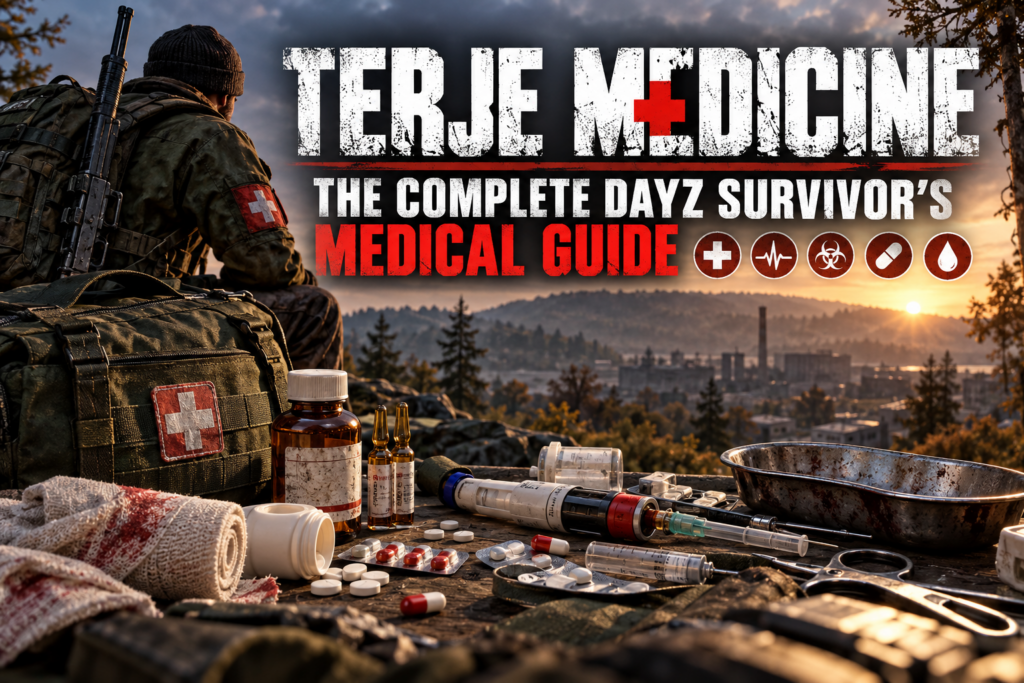
1. Understanding Terje Medicine
Terje Medicine introduces several interconnected systems:
- Injuries and trauma: Bruising, cuts, gunshot wounds, internal organ damage, concussion and surgical treatment.
- Infections and diseases: Colds, pneumonia, food poisoning, chemical poisoning, zombie infection, sepsis and rabies.
- Medication and prevention: Tablets, injectable drugs, vaccines and sterilisation.
- Blood and recovery: Controlling bleeding and accelerating blood regeneration.
- Pain and overdose: Managing symptoms without creating additional medical problems.
- Sleep and psychological health: Fatigue, stress, hallucinations and recovery.
- Psionic exposure: Special environmental hazards affecting mental health.
Many conditions progress through increasingly dangerous stages. A medicine suitable for an early-stage illness may not be appropriate once that illness becomes severe.
The important lesson is simple: identify the problem, establish how serious it has become and select the appropriate treatment.
2. Medicines, Syringes and Vaccines
Tablets
Tablets are generally the easiest medicines to carry and administer. They are commonly used for prevention, mild illnesses and early-stage conditions.
A standard pack contains ten tablets. Compatible packs can be combined to save inventory space.
Ampoules
Ampoules contain injectable medication, often intended for more serious conditions.
You need a syringe to administer the contents. Once used, the syringe becomes contaminated and must be sterilised before being used again.
According to the reference guide, syringes can be disinfected using alcohol or by boiling them in a pot of water over a fire.
Injectors
Injectors contain medication ready for immediate use without a separate syringe.
They are single-use items, making them particularly useful when a survivor needs rapid treatment.
Vaccination
Vaccines reduce the risk of contracting specific diseases. They are preventive treatments rather than replacements for appropriate care after an infection has developed.
| Vaccine | Protection duration | Overdose value |
|---|---|---|
| Vaxicam | 14,400 seconds (4 hours) | 0.8 |
| Zerivax | 7,200 seconds (2 hours) | 1.5 |
| Rabivax | 14,400 seconds (4 hours) | 1.3 |
These are published reference durations, not necessarily the settings on every server.
Sterilisation and hygiene
Dirty equipment is dangerous. A medical procedure performed with contaminated instruments can introduce an infection into an otherwise treatable wound.
Terje Medicine includes alcohol tincture and disinfectant spray for sterilisation.
Before attempting surgery, clean your hands and medical equipment. Continue monitoring the wound afterwards.
3. Injuries, Bruising and Surgery
Hematomas: When a beating leaves its mark
A hematoma is a bruise caused by physical trauma.
Zombie attacks, blunt weapons and impacts stopped by body armour can all produce bruising. Minor bruises may disappear naturally, but numerous hematomas can reduce your character’s health.
The following ointments accelerate recovery:
| Medication | Form | Effect duration |
|---|---|---|
| Viprosal | Ointment | 300 seconds |
| Capsicum | Ointment | 400 seconds |
| Finalgon | Ointment | 600 seconds |
All three have a published overdose value of 0.0.
Gunshot wounds, stab wounds and internal injuries
A bullet wound is not necessarily resolved by applying a bandage.
Terje Medicine distinguishes between penetrating injuries, external bleeding and damage to internal organs.
Your immediate priority is to control blood loss. Hemostatic bandages are more effective than ordinary bandages or rags.
However, bandaging alone may not resolve the underlying injury. Foreign objects can remain embedded in the wound, requiring surgical intervention.
Even when body armour prevents penetration, the impact can still cause bruising.
Surgical equipment
Different medical kits provide different treatment strengths and procedure times.
The following values are shown as treatment strength / treatment time.
| Equipment | Uses | Internal injury | Bullet wound | Cut wound |
|---|---|---|---|---|
| Medical Bowl, Ceramic | 1 | 0.05 / 90 | 0.2 / 40 | 0.4 / 30 |
| Medical Bowl, White | 1 | 0.05 / 90 | 0.2 / 40 | 0.4 / 30 |
| Field Surgical Kit | 5 | 0.2 / 40 | 0.5 / 25 | 0.7 / 20 |
| IFAK | 10 | 0.3 / 40 | 0.6 / 30 | 0.8 / 20 |
| AFAK | 20 | 0.3 / 40 | 0.6 / 30 | 0.8 / 20 |
The larger kits provide greater capacity and stronger treatment effects.
Surgical sutures
Sutures are used as part of the surgical treatment process.
A wound requiring stitches must be treated with appropriate medical equipment, and hygiene remains essential throughout recovery.
Contamination can lead to sepsis, which is considerably more dangerous than the original wound.
4. Concussion and Head Injuries
A concussion may result from a powerful blow to the head, an explosion or an impact stopped by a ballistic helmet.
Symptoms can include headaches, dizziness, blurred vision and impaired coordination.
Concussion symptoms may gradually disappear, but the following medicines can accelerate recovery.
| Medicine | Form | Duration | Overdose |
|---|---|---|---|
| Noopept | Tablets | 380 sec | 0.35 |
| Neirox | Ampoule | 600 sec | 0.6 |
| Neirox | Injector | 500 sec | 0.3 |
If your character becomes disorientated following a head injury, avoid further combat until the condition improves.
5. Bleeding Control and Blood Regeneration
Hemostasis: Slowing blood loss
Hemostasis refers to the body’s ability to reduce bleeding.
In Terje Medicine, specific drugs can reduce blood loss and give you additional time to stabilise an injured survivor.
| Medicine | Level | Form | Duration | Overdose |
|---|---|---|---|---|
| Vikasol | 1 | Tablets | 300 sec | 0.15 |
| Erytromixelin | 3 | Injector | 300 sec | 0.32 |
These medicines do not remove the need to treat the underlying wound.
Hematopoiesis: Rebuilding lost blood
Once bleeding has been controlled, blood regeneration becomes the next priority.
The following medicines accelerate the recovery process.
| Medicine | Level | Form | Duration | Overdose |
|---|---|---|---|---|
| Irovit | 1 | Tablets | 120 sec | 0.3 |
| Magnesium sulfate | 1 | Tablets | 120 sec | 0.3 |
| Eritropoietina | 1 | Ampoule | 600 sec | 0.4 |
| Eritropoietina | 1 | Injector | 900 sec | 0.4 |
| Erytromixelin | 2 | Injector | 300 sec | 0.32 |
Controlling bleeding and regenerating blood are two different processes. A survivor may require both.
6. Colds and Pneumonia
Exposure to low temperatures can lead to respiratory illness.
A mild cold may improve with warmth and rest. However, an untreated illness can progress to pneumonia, causing increasingly serious health deterioration.
Terje Medicine uses treatment levels to distinguish between early and advanced illness.
Level 1 treatments
| Medicine | Form | Duration | Overdose |
|---|---|---|---|
| Tetraciclina | Tablets | 300 sec | 0.45 |
| Paracetamolo | Tablets | 200 sec | 0.45 |
| Amibaktam | Tablets | 60 sec | 0.05 |
Level 2 treatments
| Medicine | Form | Duration | Overdose |
|---|---|---|---|
| Ibuprofene | Tablets | 300 sec | 0.35 |
| Nurofen | Tablets | 300 sec | 0.52 |
| Amoxiclav | Tablets | 1,200 sec | 0.75 |
| Piperacillina | Tablets | 1,100 sec | 0.45 |
| Ketarol | Ampoule | 1,200 sec | 0.5 |
| Amoxivan | Ampoule | 900 sec | 0.3 |
Level 3 treatments
| Medicine | Form | Duration | Overdose |
|---|---|---|---|
| Topoisomerasi | Injector | 900 sec | 0.65 |
| Imipenem | Ampoule | 900 sec | 0.7 |
| Flemoclave | Ampoule | 1,200 sec | 0.8 |
| Amoxiclav | Injector | 1,800 sec | 0.6 |
Preventive option: Vaxicam vaccine, with a published protection duration of 14,400 seconds.
Treatment may require multiple administrations, depending on the illness and server configuration.
7. Food Poisoning
Eating something questionable in DayZ can have consequences well beyond an unpleasant taste.
Food poisoning may result from spoiled food, undercooked meat, poisonous mushrooms, contaminated water or accidentally swallowing harmful substances.
Symptoms can include nausea, vomiting, dehydration and progressive health loss.
Level 1
| Medicine | Form | Duration | Overdose |
|---|---|---|---|
| Activated charcoal | Tablets | 300 sec | 0.01 |
| Polisorb | Tablets | 300 sec | 0.05 |
| Ftalazolo | Tablets | 1,200 sec | 0.25 |
Level 2
| Medicine | Form | Duration | Overdose |
|---|---|---|---|
| Mesalazina | Tablets | 600 sec | 0.35 |
| Chelating tablets | Tablets | 600 sec | 0.6 |
| Metoclopramide | Ampoule | 1,200 sec | 0.4 |
Level 3
| Medicine | Form | Duration | Overdose |
|---|---|---|---|
| Heptral | Ampoule | 600 sec | 0.6 |
| Stomaproxidal | Injector | 900 sec | 0.68 |
Treat the illness while monitoring hydration and general health.
8. Chemical Poisoning
Toxic gas exposure can cause chemical poisoning.
Initial symptoms may include coughing, followed by nausea, vomiting and progressively worsening health.
Advanced poisoning can become fatal without rapid treatment.
| Medicine | Level | Form | Duration | Overdose |
|---|---|---|---|---|
| Rombiopental | 1 | Tablets | 30 sec | 0.15 |
| Neurocetal | 2 | Ampoule | 500 sec | 1.25 |
| Injector AntiChem | 3 | Injector | 180 sec | 1.1 |
If you enter a contaminated area, leaving the source of exposure is just as important as having the correct medication.
9. Zombie Virus
Not every encounter with the infected ends when the zombie hits the ground.
Terje Medicine introduces a zombie virus that can spread through bodily fluids and aerosols.
Close combat carries an infection risk, but injuries inflicted by zombies are particularly dangerous.
Masks and suitable protective equipment can reduce exposure.
The infection has a relatively long incubation period, exceeding one real-world hour according to the reference guide. This gives survivors time to locate treatment before the terminal stage develops.
| Medicine | Purpose | Form | Duration | Overdose |
|---|---|---|---|---|
| Zivirol | Treatment | Ampoule | 1,000 sec | 2.35 |
| Zivirol | Treatment | Injector | 1,200 sec | 2.5 |
| Zerivax | Vaccination | Ampoule | 7,200 sec | 1.5 |
Once the infection reaches its terminal stage, health can deteriorate extremely rapidly.
10. Sepsis: The Danger of Infected Wounds
Sepsis can develop when infection enters an open wound.
Zombie scratches, knife injuries, gunshot wounds and poorly performed medical procedures can all create opportunities for infection.
Dirty hands and contaminated instruments increase the risk.
| Medicine | Level | Form | Duration | Overdose |
|---|---|---|---|---|
| Flemoclav | 3 | Ampoule | 1,200 sec | 0.8 |
| Imipenem | 3 | Ampoule | 900 sec | 0.7 |
| Amoxiclav | 3 | Injector | 300 sec | 0.6 |
| Topoisomerasi | 3 | Injector | 600 sec | 0.65 |
Notice that these treatments are listed at Level 3.
Prevention is considerably easier than dealing with an advanced infection. Sterilise equipment, keep wounds clean and avoid unnecessary exposure.
11. Rabies
Wolves and other infected animals present a threat beyond their immediate attack damage.
Rabies progresses through three stages.
Stage 1: Early symptoms may be mild and easily overlooked.
Stage 2: Nausea and vomiting become severe, interfering with eating and drinking.
Stage 3: Body temperature rises dramatically and health deteriorates rapidly. Survival becomes extremely difficult.
| Medicine | Level | Form | Duration | Overdose |
|---|---|---|---|---|
| Rabinoline | 2 | Ampoule | 600 sec | 0.8 |
| Rifampicina | 3 | Ampoule | 300 sec | 1.35 |
| Rabinucoline | 3 | Injector | 900 sec | 1.46 |
Rabivax is the preventive vaccine listed in the reference guide, with a protection duration of 14,400 seconds.
If you are planning to explore areas populated by dangerous animals, vaccination and suitable medication are worth considering before you leave your base.
12. Pain Management
Pain is a separate medical consideration in Terje Medicine.
Injuries can create different levels of pain, and severe discomfort can interfere with your ability to function effectively.
Although pain may gradually decrease naturally, medication can improve recovery and reduce its effects.
| Medicine | Level | Form | Duration | Overdose |
|---|---|---|---|---|
| Codeina | 1 | Tablets | 300 sec | 0.2 |
| Analgin | 1 | Tablets | 500 sec | 0.15 |
| Nimesulide | 1 | Tablets | 600 sec | 0.25 |
| Paracetamolo | 1 | Tablets | 200 sec | 0.45 |
| Ibuprofene | 1 | Tablets | 600 sec | 0.35 |
| Nurofen | 1 | Tablets | 350 sec | 0.52 |
| Noopept | 1 | Tablets | 380 sec | 0.35 |
| Ketarol | 1 | Ampoule | 1,200 sec | 0.5 |
| Novocaina | 2 | Ampoule | 1,200 sec | 0.4 |
| Morphinocin | 3 | Ampoule | 850 sec | 0.52 |
| Esobarbital | 3 | Ampoule | 900 sec | 0.65 |
| Reanimatal | 1 | Injector | 240 sec | 1.85 |
| Morphine | 3 | Injector | 300 sec | 0.75 |
| Promidol | 3 | Injector | 600 sec | 0.45 |
Pain relief does not automatically cure the injury responsible for the pain.
13. Medication Overdose
More medicine does not necessarily mean faster recovery.
Terje Medicine tracks the accumulation of medicinal and toxic substances in your character’s body.
Excessive exposure can cause an overdose, which progresses through three stages.
Stage 1: Nausea, hallucinations and impaired awareness.
Stage 2: More serious deterioration, potentially including unconsciousness.
Stage 3: Critical deterioration with a high risk of death.
The overdose value listed beside each medication indicates its contribution to the system.
The published guide lists water as a Level 1 treatment, with a 300-second effect duration and an overdose value of 0.0.
Avoid repeatedly administering medicines without considering their effects and the character’s existing condition.
14. Sleep, Exhaustion and Recovery
Sleep becomes another essential survival resource with Terje Medicine.
Ignoring exhaustion can eventually leave your character incapable of functioning.
When the sleep indicator turns yellow, you may begin yawning and experience worsening vision.
When it turns red, your character risks collapsing from exhaustion.
Finding somewhere to sleep
Suitable locations include a house, tent, sleeping bag or a safe position near a fire.
However, sleep may be prevented by extreme cold, severe hunger or an illness at Stage 2 or above.
During sleep, health and blood regenerate more quickly. Mild illnesses may also improve.
Energy drinks
Energy drinks provide temporary recovery benefits.
| Energy drink | Recovery value | Listed duration | Overdose |
|---|---|---|---|
| MadBull | 8 | 1.0 | 0.0 |
| Gang | 6 | 1.0 | 0.0 |
| Yaguar | 10 | 1.0 | 0.0 |
| PrayBoy | 4 | 1.0 | 0.0 |
| 6Energy | 8 | 0.8 | 0.0 |
Energy drinks can help you manage fatigue temporarily, but they are not a complete substitute for proper rest.
15. Mental Health and Psychological Stress
Terje Medicine also models psychological deterioration.
Stressful experiences can reduce your character’s mental health.
Examples include repeated zombie attacks, exposure to psionic zones and consuming human flesh.
As mental health deteriorates, symptoms may include panic, hallucinations and disorientation.
These effects can make ordinary survival tasks much more dangerous.
Medication
| Medicine | Level | Form | Duration | Overdose |
|---|---|---|---|---|
| Adepress | 1 | Tablets | 150 sec | 0.2 |
| Agteminol | 1 | Tablets | 120 sec | 0.2 |
| Venlafaxina | 1 | Tablets | 250 sec | 0.3 |
| Actaparoxetine | 2 | Ampoule | 400 sec | 0.4 |
| Amitriptilina | 3 | Ampoule | 600 sec | 0.4 |
| Metralindole | 2 | Ampoule | 300 sec | 0.1 |
| Amfitalicyne | 3 | Injector | 520 sec | 0.6 |
These medications are used within the game to help stabilise psychological condition and reduce the effects of stress.
16. Psionic Zones
Some areas present dangers that cannot be solved with body armour and ammunition.
Psionic zones affect a character’s psychological condition, with the intensity of the effect increasing as you approach the centre.
What happens inside a psionic zone?
Mental health deteriorates, potentially causing panic, hallucinations and abnormal behaviour.
At the most severe level, when mental health reaches zero, a character may perform unpredictable and potentially lethal actions.
Protecting yourself
The published guide identifies two principal methods of protection.
Antidepressant medication: Helps counter the psychological effects of exposure.
PSI Helmet: Provides a standard protection value of 95%, according to the reference.
Before entering a psionic zone, prepare suitable protection and make sure you have a safe route out.
17. MetaMarmite’s Practical Survival Advice
Medical supplies are only useful when you understand what they do.
Before heading into dangerous territory, consider the risks you are likely to encounter.
A short trip through a village may require little more than bandages and basic medication. A lengthy expedition into infected territory, an area populated by wolves or a hazardous zone requires considerably more preparation.
Keep your medical supplies organised so that you can find the correct treatment quickly.
When you are injured, deal with the most immediate threat first. Control serious bleeding, move somewhere safe and then assess the remaining injuries.
If an illness develops, identify its symptoms and treatment level rather than randomly consuming every medicine in your inventory.
And remember that treating one problem does not necessarily resolve another. Stopping blood loss, repairing a wound, managing pain and restoring blood volume are separate medical concerns.
The survivor who understands those differences has a much better chance of returning home.
Final Word: Survive the Treatment as Well as the Injury
Terje Medicine makes survival more challenging, but it also rewards preparation, observation and sensible decisions.
A stocked medical kit is valuable. Knowing when and how to use its contents is even more valuable.
The next time you find yourself staggering away from a zombie attack, bleeding, exhausted and wondering why your vision has gone strange, don’t immediately reach for the first tablets you find.
Work out what’s wrong first.
Stay prepared. Stay alive. And welcome to MetaMarmite.
Reference and attribution: This guide has been independently rewritten for MetaMarmite using the Terje Medicine information published by Project DayZ Reborn on 16 March 2026. Drug statistics and treatment values are reproduced as reference data and should be checked against the active server configuration. Terje Medicine is a DayZ modification, and the information above describes gameplay mechanics only.